

Computational molecular science

Computational and Predictive Nanochemistry Group

We develop computational methods, artificial intelligence, and open software to understand and accelerate the discovery of colloidal quantum dots, bridging atomistic simulations with data-driven materials design.

Prof. Ivan Infante, Ikerbasque Research Professor
BCMaterials, Basque Center for Materials, Applications and Nanostructures

BCMaterials logoIkerbasque logo

InfanteLab develops computational nanochemistry, artificial intelligence, and digital platforms for realistic colloidal quantum dots and semiconductor nanocrystals.

4 Quantum dot research pillars
5 Active software and platform projects
BCMaterials UPV/EHU Science Park, Leioa

Activities

Research themes

We combine atomistic modelling, electronic structure theory, machine learning, and open software to understand and design colloidal quantum dots.

AI-accelerated nanocrystal design

Artificial Intelligence for Quantum Dot Discovery

We develop next-generation artificial intelligence methodologies that enable atomistic simulations of realistic quantum dots at unprecedented length and time scales. By combining active learning, universal machine-learning force fields, and digital-twin concepts, we accelerate the discovery and optimization of semiconductor nanocrystals for optoelectronics, sensing, photocatalysis, and quantum technologies.
  • Machine Learning Force Fields
  • Active Learning
  • Digital Twins

Realistic models from atoms to properties

Atomistic Modelling of Colloidal Quantum Dots

We develop realistic atomistic models of semiconductor quantum dots to understand how finite size, crystal structure, composition, and surface chemistry determine their electronic and optical properties. Our work combines first-principles electronic structure methods with molecular dynamics simulations to bridge theory and experiment across a broad range of semiconductor nanocrystals.
  • Density Functional Theory
  • Molecular Dynamics
  • Electronic Structure

Interfaces, ligands, defects, and traps

Surface Chemistry and Heterostructured Nanocrystals

The surface ultimately determines the performance of colloidal quantum dots. We investigate ligand binding, surface reconstructions, oxidation, defects, and core/shell interfaces to understand and engineer trap states, charge localization, and excitonic properties. Our research spans II-VI, III-V, IV-VI, and halide perovskite nanocrystals with a strong focus on realistic atomistic models.
  • Surface Chemistry
  • Core/Shell Quantum Dots
  • Interface Engineering

Open tools for computational nanochemistry

Scientific Software and Digital Platforms

Our group develops computational software that enables reproducible, accessible, and scalable simulations of colloidal quantum dots. We build tools covering the entire computational workflow, from atomistic model generation and electronic structure analysis to machine-learning training and cloud-based digital platforms, helping transform computational nanochemistry into an open and data-driven discipline.
  • Scientific Software
  • Computational Workflows
  • Open Science

Current work

Research programmes

Scientific questions that connect our atomistic methods, machine learning, and experiment-facing nanomaterials research.

01

Predictive materials design / Active

AI-accelerated quantum dot discovery

We develop active-learning strategies and transferable machine-learning force fields that extend realistic quantum-dot simulations to experimentally relevant sizes and time scales.
  • Active learning
  • Universal ML potentials
  • Uncertainty quantification
02

Surface electronic structure / Active

Realistic surfaces, defects, and trap states

We connect ligand binding, oxidation, surface reconstruction, and under-coordinated sites with charge localization, non-radiative losses, and photoluminescence efficiency.
  • Surface chemistry
  • Trap states
  • Photoluminescence
03

Interface engineering / Active

Core/shell and heterostructured nanocrystals

We investigate how composition, morphology, strain, interfaces, and ligand environments control carrier confinement and excited-state properties in complex nanocrystals.
  • Core/shell QDs
  • Heterostructures
  • Excited states
04

Open computational nanochemistry / Active

Digital twins for colloidal nanomaterials

We connect reproducible atomistic construction, simulation, analysis, and data-driven optimization in digital workflows designed to bridge computational predictions and experiment.
  • Digital twins
  • Reproducible workflows
  • Theory–experiment bridge

Team

People

Current group members working on machine-learning force fields, atomistic quantum dot simulations, electronic structure, and digital platforms.

Prof. Ivan Infante

Principal Investigator

Prof. Ivan Infante

Ikerbasque Research Professor at BCMaterials
Vikas Kumar

Postdoc

Vikas Kumar

ML force fields development for low bandgap materials
Zain Ul Abideen

PhD student

Zain Ul Abideen

Developer of the Orchestr.AI platform
Abdessamad El Adel

PhD student

Abdessamad El Adel

Atomistic large-scale simulations of quantum dots
Shehla Gul

PhD student

Shehla Gul

Electronic structure of quantum dots
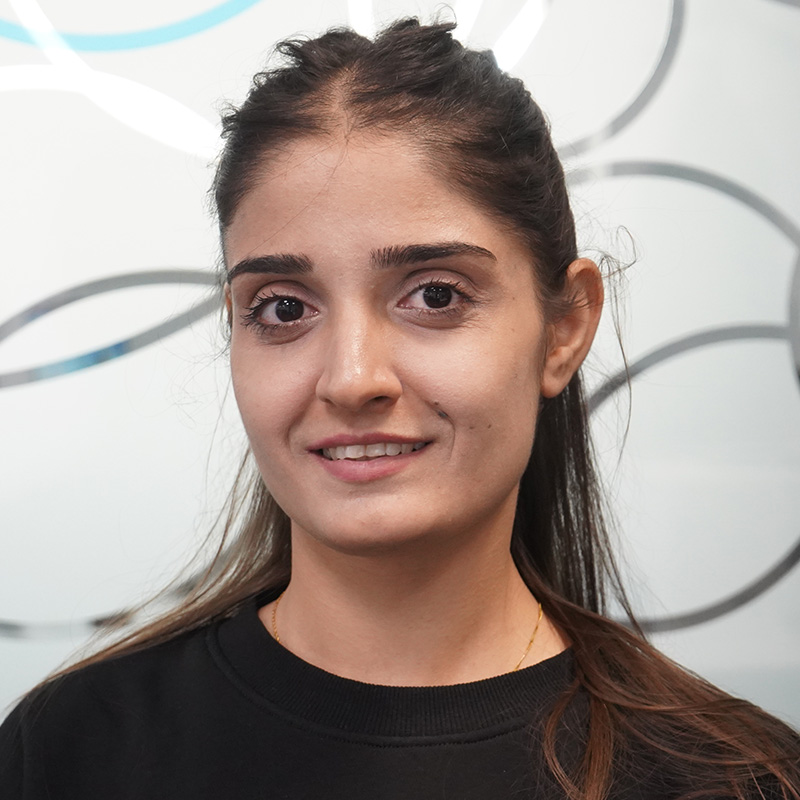
Masuma Suleymanova

PhD student

Masuma Suleymanova

MLFF and active learning of CdSe quantum dots
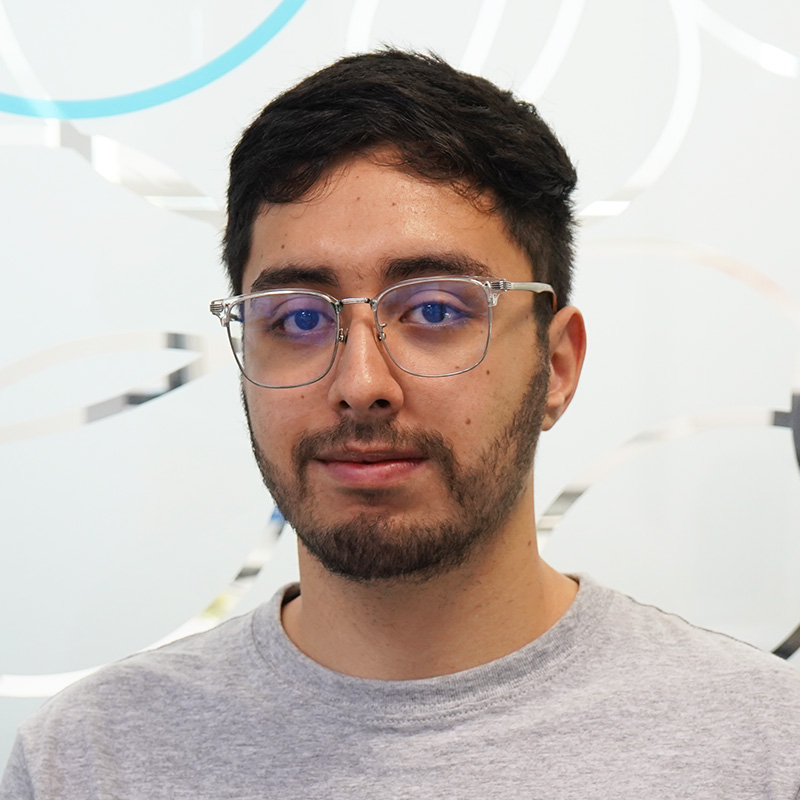
Muhammad Usman

PhD student

Muhammad Usman

MLFF and universal ML models of quantum dots
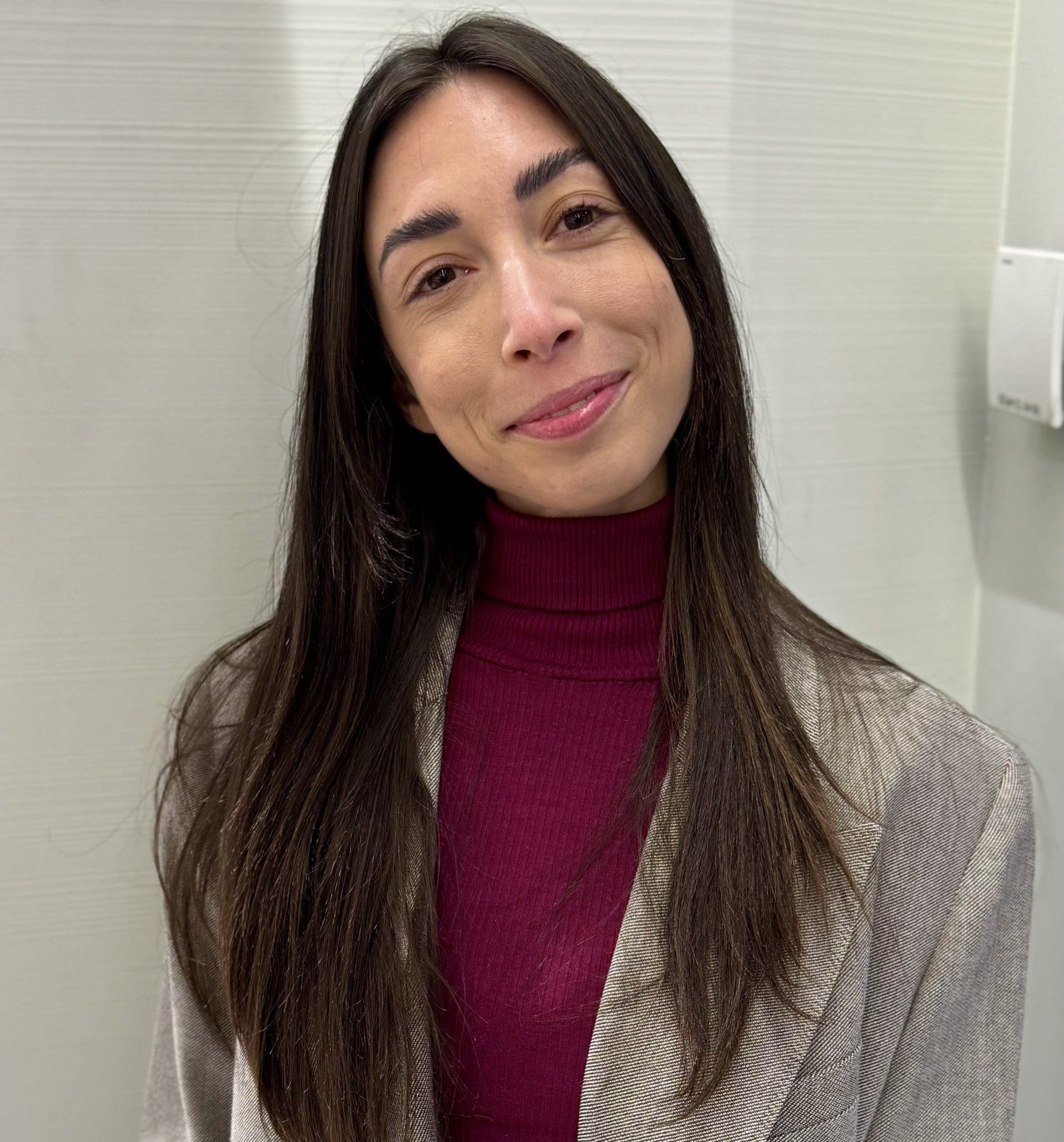
Camilo Rodriguez Quintero

PhD student

Camilo Rodriguez Quintero

Developing ML models for reactive quantum dots

Former members

Alumni

Jordi Llusar

Postdoc

Jordi Llusar

Electronic structure and surface traps of core-only and core-shell quantum dots
Mario Fernandez-Pendas

Postdoc

Mario Fernandez-Pendas

Developer of the Orchestr.AI platform
Roberta Pascazio

PhD student

Roberta Pascazio

Atomistic large-scale simulations of quantum dots
Juliette Zito

PhD student

Juliette Zito

Electronic structure of quantum dots

Postdoc

Francesco Zaccaria

Electronic structure of quantum dots

Postdoc

Urko Petralanda

Electronic structure of quantum dots
Stephanie ten Brinck

PhD student

Stephanie ten Brinck

Electronic structure of quantum dots

Selected outputs

Highlighted publications

A curated selection from Ivan Infante's Scopus publication export dated 9 July 2026. The complete record is available on the publications page.

2026

Interfacial Reconstructions and Engineering in III–V@II–VI Core–Shell Quantum Dots

Llusar, Jordi, El Adel, Abdessamad, De Trizio, Luca, Manna, Liberato, Hens, Zeger, Infante, Ivan

ACS Energy Letters 11(5), 3945-3952

DOI
2025

Fuzzy Band Structure of Quantum Dots by Bloch Orbital Expansion: Unconventional Insights into Geometric-Electronic Structure Relations

Hens, Zeger, Llusar, Jordi, Infante, Ivan

ACS Nano 19(8), 8227-8237

DOI
2024

Surface Reconstructions in II-VI Quantum Dots

Llusar, Jordi, du Fossé, Indy, Hens, Zeger, Houtepen, Arjan, Infante, Ivan

ACS Nano 18(2), 1563-1572

DOI
2023

Surface Chemistry of Lead Halide Perovskite Colloidal Nanocrystals

De Trizio, Luca, Infante, Ivan, Manna, Liberato

Accounts of Chemical Research 56(13), 1815-1825

DOI
View all 163 publications

Reusable science

Software and resources

Open platforms and computational tools developed by the group for model construction, force-field training, excited-state analysis, and large-scale simulations.

Open platform

QuantumDotSpace

Cloud platform for constructing, simulating, visualising, and designing colloidal quantum dots with first-principles simulations and artificial intelligence. It is the public-facing environment for connecting model construction, simulation workflows, and AI-assisted materials discovery.

  • Cloud platform
  • First-principles workflows
  • AI design
GitHub repository

Orchestr.AI

Unified, modular, engine-agnostic framework for training machine-learning force fields for quantum dots. It supports multiple ML engines, including SchNet, PaiNN, SO3net, FieldSchNet, NequIP, Allegro, and MACE, with workflows for preprocessing, training, inference, benchmarking, and HPC execution.

  • SchNet / PaiNN
  • NequIP / Allegro
  • MACE
  • SLURM workflows
GitHub repository

QD Builder

Python package for building and passivating atomistic quantum-dot models from CIF files. It supports Wulff and spherical cuts, core-shell particles, facet-specific surface energies, coordination-aware ligand passivation, charge-balance logic, and experimental Janus heterostructure workflows.

  • Wulff cuts
  • Core-shell QDs
  • Janus structures
  • Ligand passivation
GitHub repository

QDEX

Post-processing package for electronic structure calculations of finite quantum dots and excited-state analysis.

  • Optical transitions
  • Excitons
  • Transition dipoles
GitHub repository

auto-FOX

Automated Forcefield Optimization Extension for analyzing potential energy surfaces and constructing force-field parameters. The toolkit includes multi-XYZ trajectory handling, RDF/ADF, RMSD/RMSF, shell-structure descriptors for nanocrystals, and Monte Carlo force-field parameter optimization.

  • PES analysis
  • RDF / ADF
  • Shell descriptors
  • Force-field optimization
GitHub repository

miniCAT

Lightweight tool for attaching chemical ligands to nanocrystal and quantum-dot surfaces directly from SMILES strings. It uses RDKit-based functional-group detection to anchor ligands on dummy sites, with configurable multi-ligand, multi-pass passivation ratios and spatial distributions.

  • SMILES ligands
  • RDKit
  • Multi-pass passivation
  • Surface anchoring

Updates

News

Jul 2026

InfanteLab research website launched

Our new group website brings together current research programmes, open scientific software, team profiles, and the publication record in one place.

2026

QuantumDotSpace platform launched

The QuantumDotSpace cloud platform for AI-accelerated quantum dot discovery is now publicly available, enabling collaborative model construction and simulation workflows.

2025

Selected quantum dot publications highlighted

The publication section now uses the Scopus BibTeX export and highlights selected quantum dot papers.

Contact

Work with us

We welcome collaborations across theory, simulation, synthesis, spectroscopy, device physics, and data-driven materials discovery.

Principal Investigator
Prof. Ivan Infante
Location
UPV/EHU Science Park, Leioa, Spain
Address
BCMaterials, Basque Center for Materials, Applications and Nanostructures, UPV/EHU Science Park, 48940 Leioa (Bizkaia), Spain
BCMaterials logoIkerbasque logo